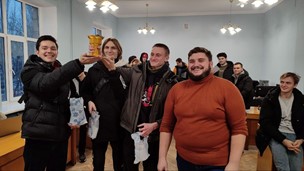
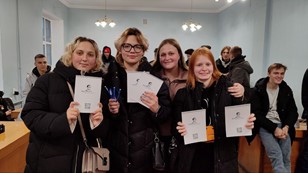
 On 06.12.2024, the integrated event XIII International Scientific and Practical Conference "GLUSHKOV READINGS. MODERN CYBERNETICS 2024" took place, organized by the V. M. Glushkov Institute of Cybernetics of the National Academy of Sciences of Ukraine, Vadym Hetman Kyiv National Economic University, Taras Shevchenko National University of Kyiv, and NTUU "Igor Sikorsky Kyiv Polytechnic Institute".
On this day, almost simultaneously at two different venues, events were held aimed not only at reminding contemporaries about the scientific achievements and creative path of V. M. Glushkov as an outstanding personality but also at presenting the development of his ideas in the works of scientists, educators, and creative youth.
At 10:30, an online conference format began at the V. M. Glushkov Institute of Cybernetics of the NAS of Ukraine, featuring a scientific-theoretical section covering a wide range of topics:
- Mathematical cybernetics, systems analysis, machine learning, neural networks, artificial intelligence, cloud and quantum computing
- Computer tools, automated control systems, informatization, digitalization, robotization, open science
- Optimization and its applications, numerical methods and computer modeling
- Reliability and robustness of complex systems
- Operations research and controlled processes
- Intelligent information technologies
- Real-time video systems
- Microprocessor technology
- Sensor devices, systems, and contactless diagnostic technologies
- Inductive modeling and control
Conference Materials
At 11:00, the young scientists' section of the conference "GLUSHKOV READINGS: MODERN CYBERNETICS 2024" began.
The Department of Information Systems in Economics at Vadym Hetman Kyiv National Economic University organized a platform based on the principle of the American DEF CON conference, which involves holding the event through open discussion of current cybernetics issues, exchange of experience among students, lecturers, and IT specialists. A plenary session and a practical part of the conference were organized.
The plenary session of the conference began with welcoming remarks from academician of the NAS of Ukraine, Deputy Director for Scientific Work of the V. M. Glushkov Institute of Cybernetics, Doctor of Physical and Mathematical Sciences, Professor O. M. Khimich, and Vice-Rector for Scientific Work of Vadym Hetman Kyiv National Economic University, Doctor of Economics, Professor L. L. Antonyuk.
Larisa Antonyuk emphasized the importance of cybernetics and information technologies in the modern world. Her speech set the tone for the further work of the conference aimed at integrating theory and practice.
Speeches by representatives of the V. M. Glushkov Institute of Cybernetics highlighted the latest trends in the development of artificial intelligence, cybernetic systems, and methods of their application in various fields.
Leading lecturers of the Department of Information Systems in Economics and specialists in the field of information technologies also addressed the conference participants with welcoming remarks.
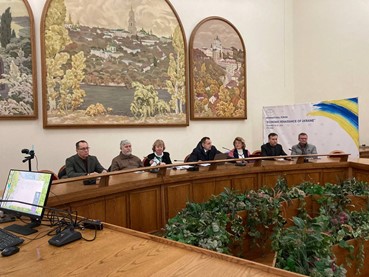
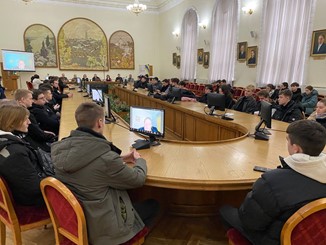
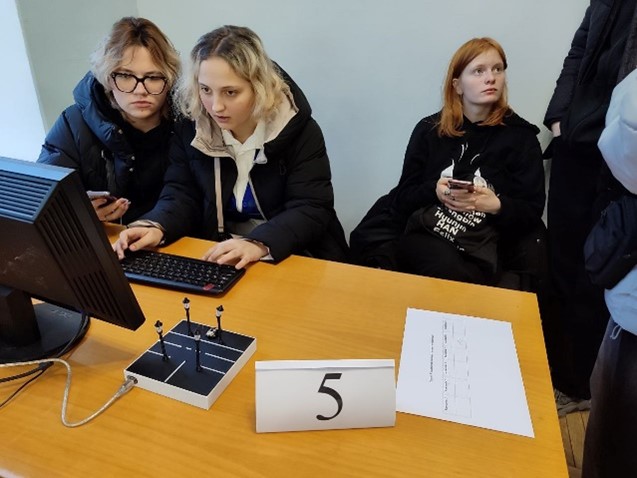
The second part of the conference was organized with the support of the Educational and Scientific Laboratories of the Department of Information Systems in Economics "Information Control Systems and Technologies" and "Artificial Intelligence Systems" under the leadership of Ya. Yu. Voznyuk and included a practical part with a competition, in which students of the ISE department and the Professional College of Information Systems and Technologies of Vadym Hetman Kyiv National Economic University participated.
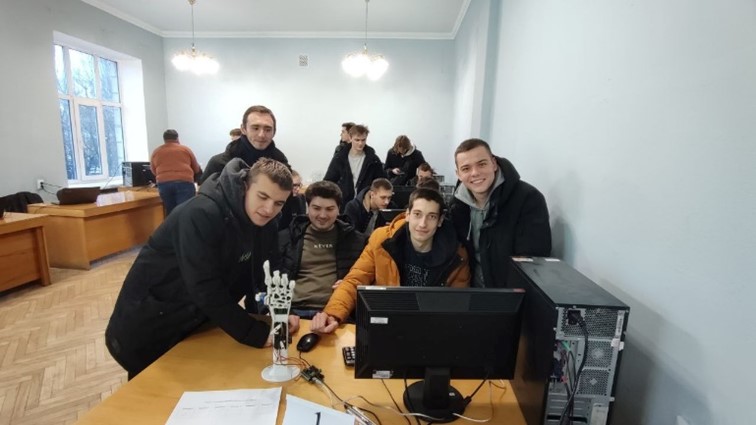
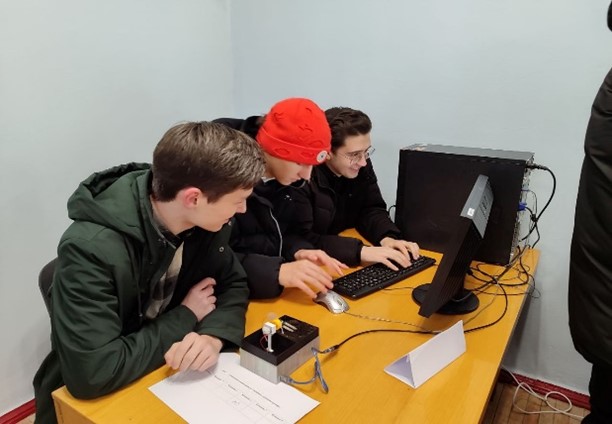
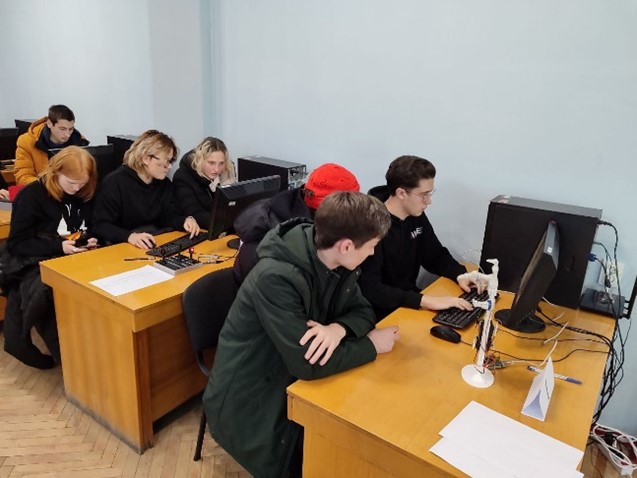
There were two sections combining demonstrations of innovative developments and programming competitions for software-hardware systems. In the first section, visitors had the opportunity to familiarize themselves with systems such as a parking control system, a voice assistant, and a security system, communicate with developers, and test the functionality of the systems. In the second section, five teams competed in programming automated systems, including fire safety systems and a robotic arm control system.
As a result of the competition, two teams took first place with a minimal margin, and three teams shared second place, confirming the spirit of competition and team cohesion. All participants in the practical part received valuable prizes and gifts.